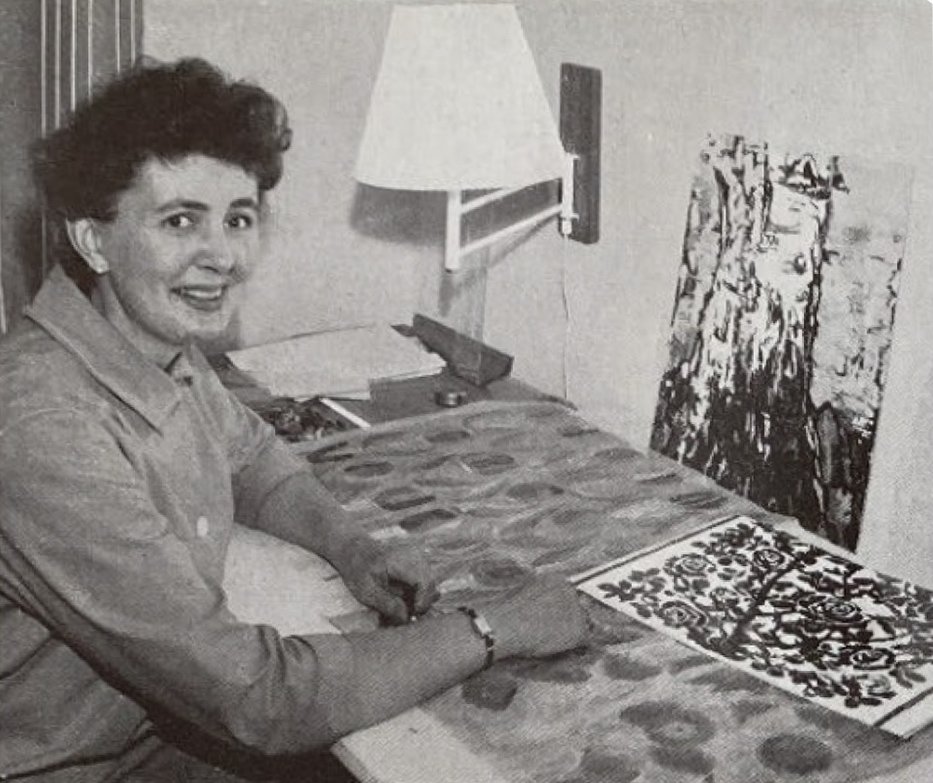
Alf Sture and Gunnvor Een Sture
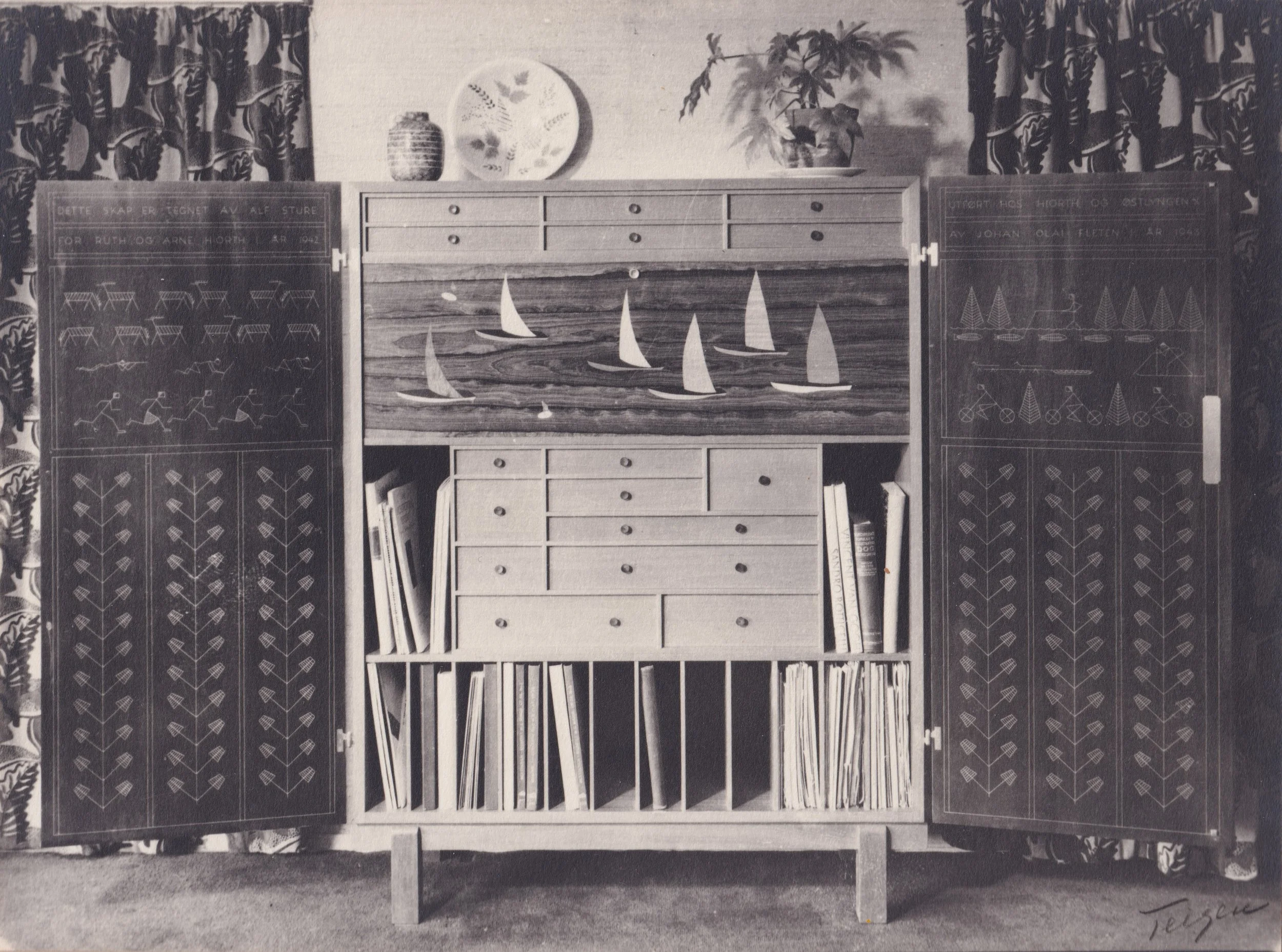
Alf Sture and Gunnvor Een Sture worked as a Norwegian design couple across the mid-20th century, both trained at the State School of Arts and Crafts in Oslo (Gunnvor was originally Alf's student there before they married in 1946). Alf was a furniture designer and interior architect who studied under Arne Korsmo but never fully embraced strict theoretical functionalism; his own idiom grew out of Norwegian craft traditions — boatbuilding, tool-making, farm furniture — combined with a deep respect for 18th-century English cabinetmaking (Chippendale, Sheraton, Hepplewhite) and the Danish rigor of Kaare Klint. He became known for pieces like the long-running "1036" chair, valued for their disciplined proportions and honest use of materials such as teak, oak, and pine, and he later ran his own workshop and showroom (Knag) after years designing for Hjorth & Østlyngen.
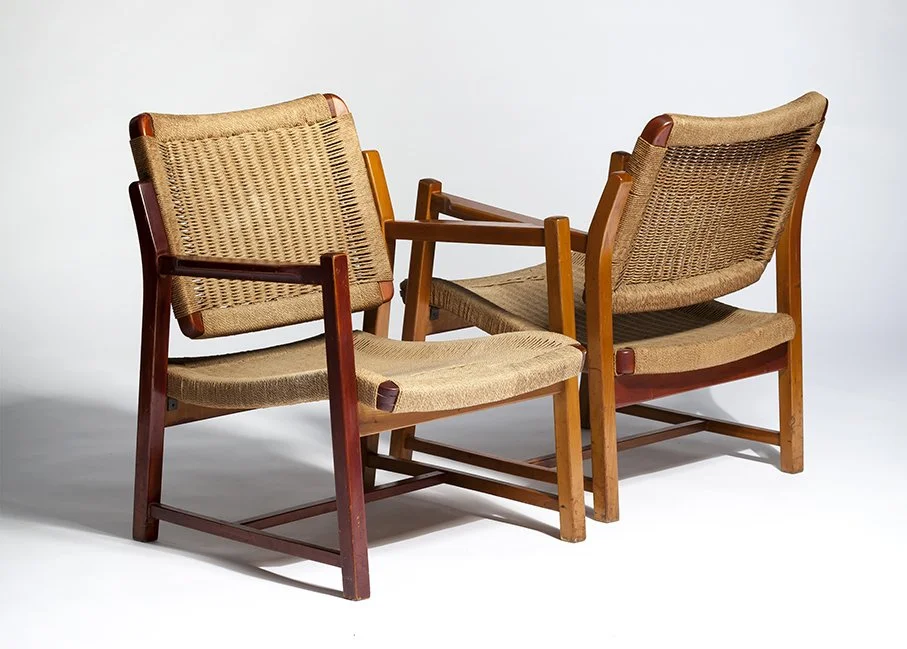
Gunnvor Sture, meanwhile, became best known as a textile and surface-pattern designer rather than a furniture designer in her own right, though she also drew technical working drawings for several of Alf's chairs (crediting her own designs for pieces like the "Patrice" and "Gripsholm" chairs, the "Blanka" rocking chair, and the "Martine" bed). Her real signature was bold, hand-drawn floral prints — wild roses against blue sky, bluebell meadows, butterfly motifs — produced in multiple colorways, mainly through Sandvika Veveri, at a time when Norwegian textiles leaned toward plain or subtly striped fabric. Her work was explicitly linked by contemporary critics to the Swedish tradition of floral decorative art running from Carl von Linné's botanical illustration through Carl Larsson and Carl Malmsten, and she also designed wallpaper patterns and interior decoration schemes, including work for Hotel Continental in Oslo.